


Explore more wedding ideas & advice
Wedding Reception Stationery
Explore
Our service has assisted tens of thousands of couples worldwide in planning their dream weddings!
Wedding Reception Stationery — Day-of Paper Goods Guide
Wedding reception stationery is the subset of paper goods that lives at the venue itself, not in the mail. Six core pieces sit in this category — seating chart sign, escort cards, place cards, table numbers, menu cards and table seating cards — plus a handful of supporting items like programs, welcome signs and bar menus. Built right, the name-bearing pieces in the reception suite generate from the same seating chart project, so they stay in sync through final-week RSVP changes.
For a phase-by-phase enumeration of every wedding stationery piece (including pre-wedding and post-wedding items), see wedding stationery checklist. For how the pieces work as one cohesive set, see wedding stationery suite.
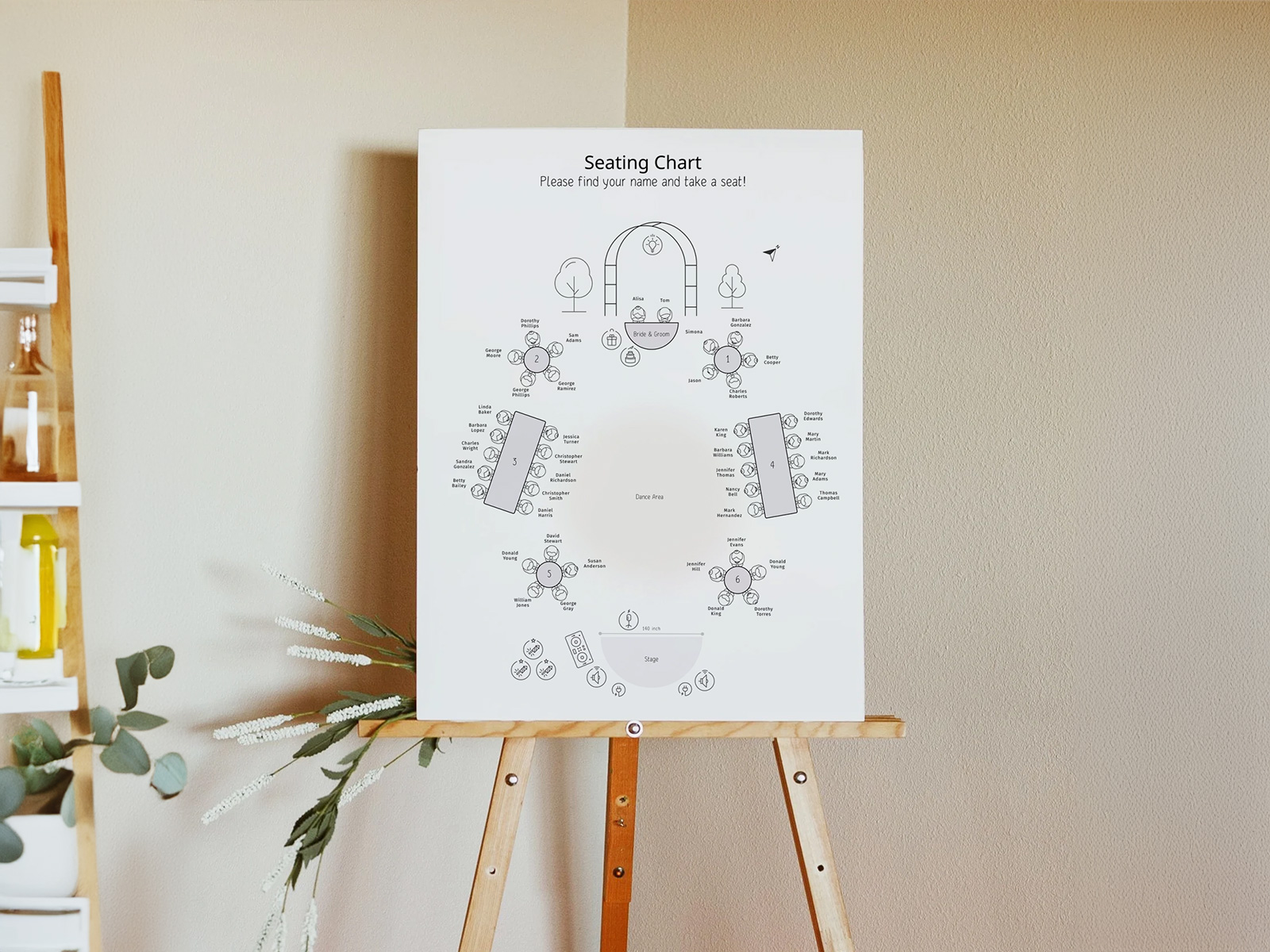
All six reception items are built in your seating chart project, and five of them read its names and tables. One guest list, one set of table assignments, one set of meal choices.
Final-week changes flow through on their own — once you accept a guest’s updated RSVP into the guest list, the name-bearing reception pieces pick it up from the project.
Reception stationery is built 3–4 weeks before the wedding (after RSVPs are mostly in), so the wedding checklist usually slots this work between the dress fitting and the rehearsal dinner.
Build your reception stationery
PLANNING . WEDDING — is easy to remember and even easier to use.
What Counts as Reception Stationery
Reception stationery is everything printed that sits inside the venue on the wedding day. It excludes the invitation suite (which arrives in the mail months before) and post-wedding pieces (thank-you cards, photo announcements). The pieces below are specifically the items guests interact with at the reception itself.
Elegant wedding seating chart
Generate the day-of pieces now
The Six Reception Pieces in the Platform
Six reception items are built in the platform, five of them filled in from the seating chart. Set the same fonts and colors on each, so they read as one suite at the place setting and across the room.
- Seating chart sign — see wedding seating chart sign. One large poster at the reception entrance — your floor plan with every guest at their table, or an alphabetical seating chart listing each guest with their table number.
- Escort cards — see wedding escort cards. Individual cards displayed alphabetically near the door; each guest picks up their own card and walks to the table.
- Place cards — see wedding place cards. One card per assigned seat, sitting at the place setting itself. Used when assigning specific seats, not just specific tables.
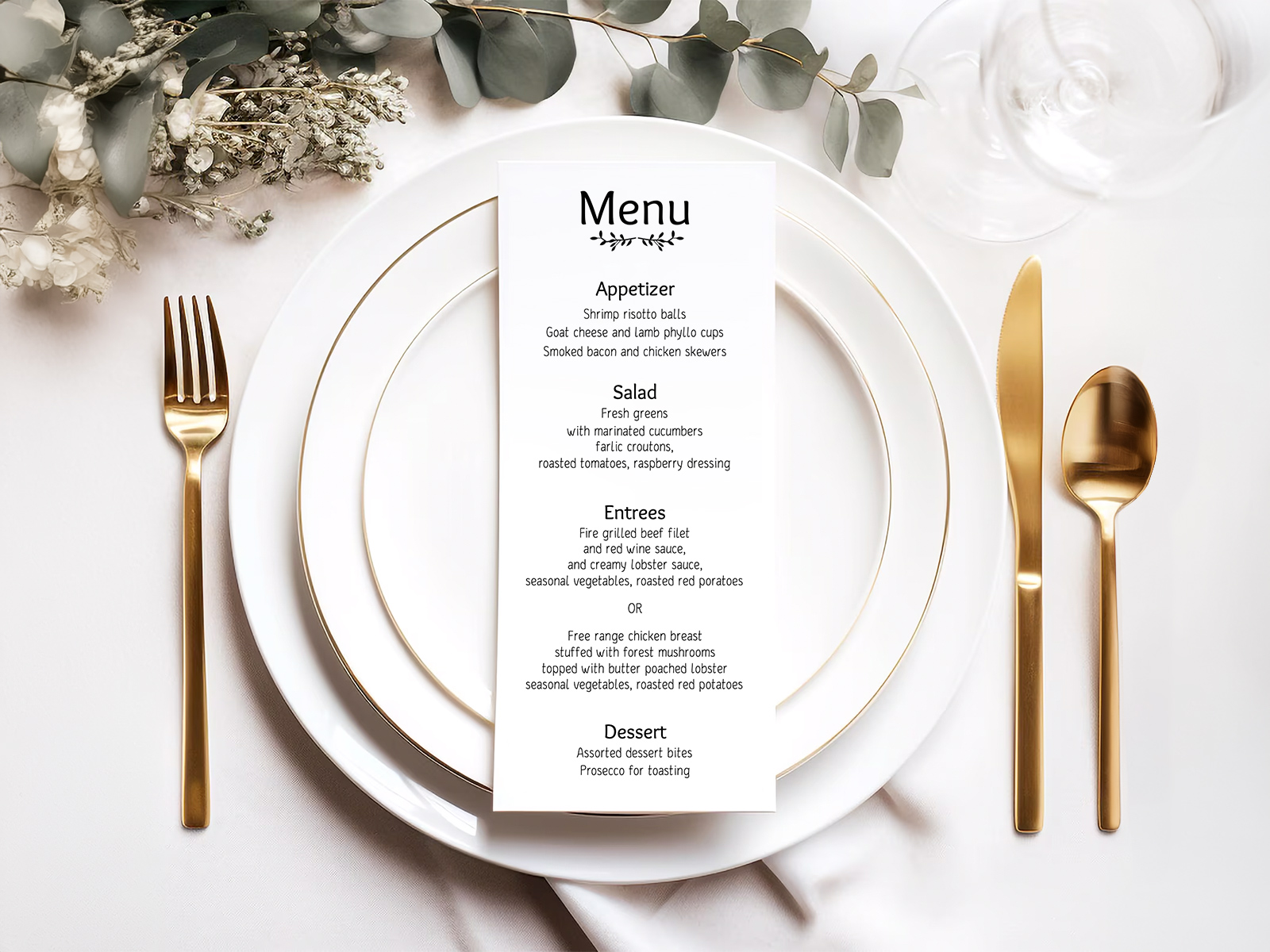
- Menu cards — see wedding menu cards. One card per guest at plated dinners (or one per table at buffets), listing the courses being served.
- Table numbers — see wedding table numbers. One per reception table, in a holder at the centerpiece.
- Table seating cards — see table seating cards. One card per table listing every guest at that table — a stylistic alternative to a single seating chart sign.
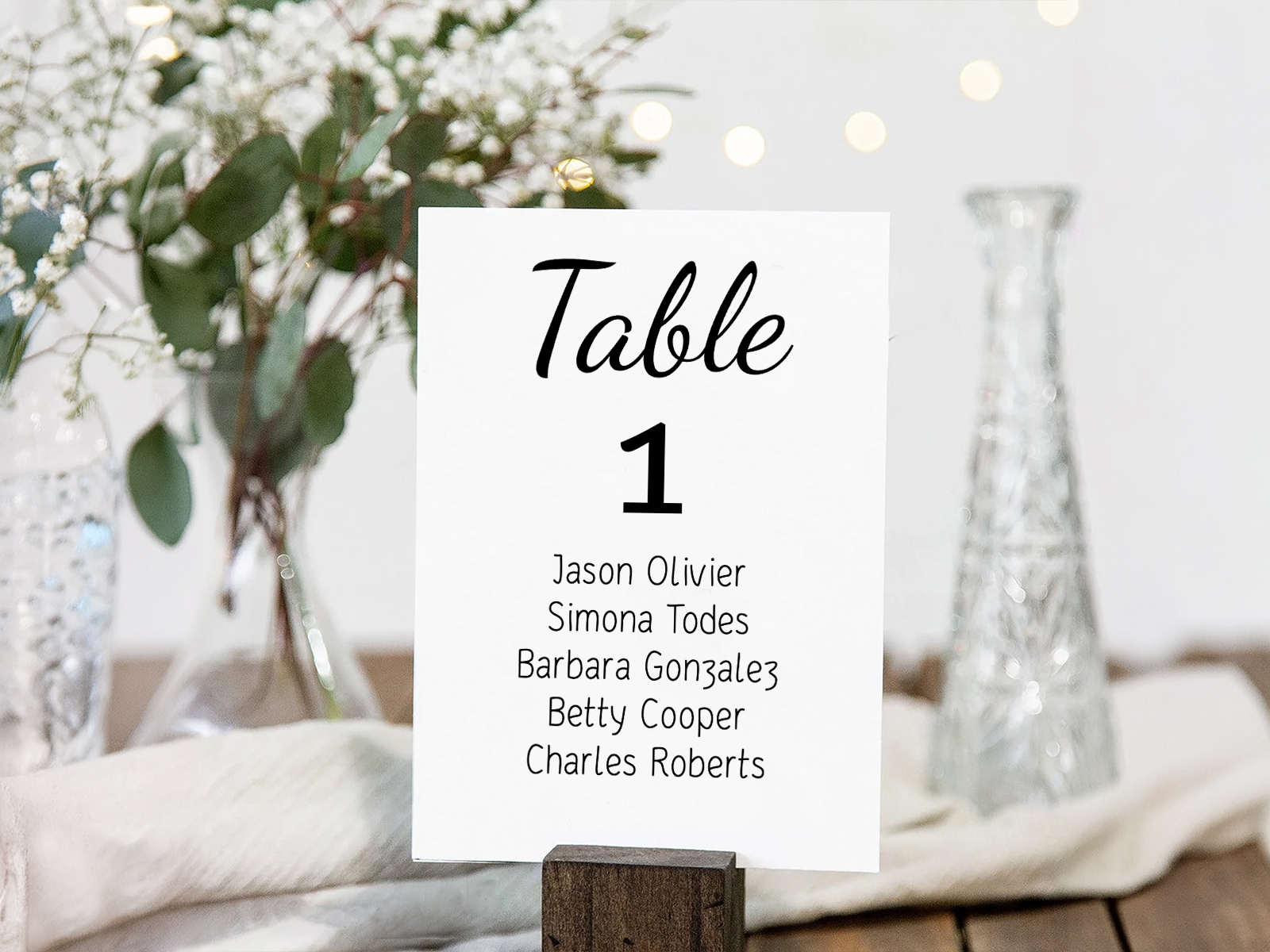
Reception Pieces Outside the Seating Data
Some reception stationery doesn’t come from the seating chart. Programs and welcome signs are designed in the same tool and fonts, just without guest data; bar menus can be made with the menu designer; favor tags usually come from the stationer who handled the invitation suite.
- Programs — one per guest at religious or formal ceremonies. Lists the order of service, names of the wedding party, hymn or reading text. Often skipped at civil ceremonies. Make one with the wedding program designer.
- Welcome signs — large entrance signage with the couple’s names, the wedding date, sometimes a small painted illustration. One per venue. See welcome signs.
- Bar menus — listing the signature cocktails, wine selections and beer options. One per bar station.
- Favor tags — small printed tags attached to wedding favors. One per favor, usually tied with twine or ribbon.
Quantity Cheat Sheet
Quantity for reception stationery follows a predictable pattern. Our tool does the math for the name-bearing pieces — one place or escort card per guest, one table number and one table seating card per table — but menus and programs are printed in whatever quantity you choose, so it’s useful to know what you’re committing to before you order print supplies or contract a stationer.
- Per guest — escort cards, place cards, menu cards (at plated dinners), programs.
- Per table — table numbers, menu cards (at buffets / family-style), table seating cards.
- Per couple — favor tags (sometimes), one shared menu (at very casual weddings).
- Per venue — seating chart sign (one or two), welcome signs, bar menus.
- Spares — add 10% for paper jams, typos, last-minute additions. For the name-bearing pieces the tool gives the exact base; you eyeball the spare buffer.
- Special cases — kids' menus printed separately when the kids' meal differs from the adult menu; multilingual cards count as one card per guest, not two.
Try it free — no sign-up needed
Reception Stationery Timeline — Why 3 Weeks Matters
Reception stationery is built 3–4 weeks before the wedding, in the window between the bulk of RSVPs arriving and the final-week venue walkthrough. Earlier than 3 weeks and you'll be reprinting half the cards as late RSVPs come in. Later than 1 week and you'll miss your printer's lead time.
The 3-week mark is also when the seating chart usually finalises. Before then, the floor plan is a moving target — guest count is still firming up, family politics are still being worked out, the venue is still negotiating which corner gets the head table. Once the chart locks, every reception piece can be exported in a single afternoon.
Why Late RSVPs Don't Have to Mean Reprinting
The most stressful moment in reception stationery production is the late RSVP — a guest confirms two days before the wedding, after the place cards, escort cards, menu cards and seating chart sign are all printed. With static templates, that means re-doing the whole batch.
Auto-generation makes this a small job. Once you accept the late reply and seat the guest, their data flows into the project, so the place cards, escort cards, table seating cards and the seating chart sign already include them — the new escort card even slots into its alphabetical place. Re-export the affected items and print only the new or changed pages; the rest of the printed batch stays untouched.
Why Use Our Tool for All Six Reception Pieces
Six reception pieces, one project. Use the same fonts and colors on every piece, build the seating chart once, collect RSVPs once — the name-bearing pieces all read the same data. Free to design and share with your partner and planner; print-ready PDFs with Premium, a one-time payment per project. And the cards keep up when anything changes — late RSVPs, swapped meal choices, moved guests, last-minute table re-arrangements.
Explore the rest of the wedding stationery hub
Each sub-page below covers one slice of wedding stationery — the complete checklist, how to build a cohesive suite, and the reception-only paper goods. The day-of pieces are made in one Planning.Wedding project, which also holds your guest list and RSVPs, seating chart, wedding website, budget, checklist and timeline.
Explore the rest of your wedding day-of stationery suite
Every item below is made in your Planning.Wedding project: the sign and the cards take names and tables from your guest list and seating chart, so one update reaches each of them, and the menu is designed right beside them. The same project holds your RSVPs, wedding website, budget, checklist and timeline.