


Explore more wedding ideas & advice
Wedding Stationery Suite
Explore
Our service has assisted tens of thousands of couples worldwide in planning their dream weddings!
Wedding Stationery Suite — How to Build a Cohesive Set
A wedding stationery suite is the full set of printed pieces — invitations, save-the-dates, day-of cards, thank-you notes — that share a visual design system. The pieces don't have to be identical, but they should look like they belong together: same font family, same color palette, same paper feel, same decorative motif. Done well, the suite gives the wedding a coherent visual identity from the first save-the-date to the final thank-you.
For a phase-by-phase enumeration of every piece, see wedding stationery checklist. For reception-specific pieces (the items that live at the venue), see wedding reception stationery.
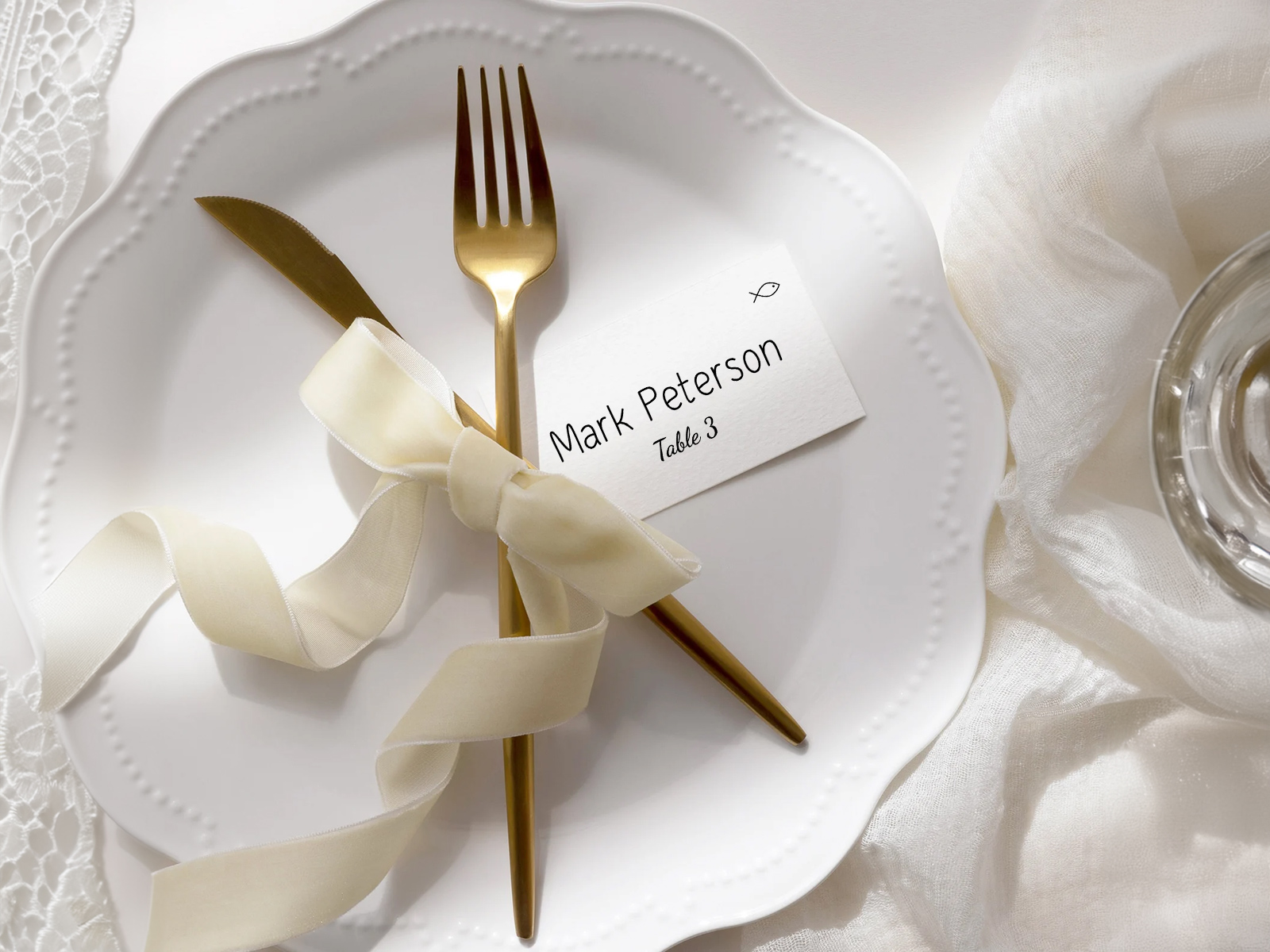
The day-of pieces in your suite — sign, menu, place cards, escort cards, table numbers, table seating cards — all generate from your seating chart project automatically.
Pre-wedding pieces (save-the-dates, wedding invitations) come from your stationer; day-of pieces come from the project. Both halves of the suite share the same design system.
If you're starting from scratch, the simplest path is to pick the design system on the invitation and let our tool inherit it for the day-of pieces — typography, color and motif copy automatically.
PLANNING . WEDDING — is easy to remember and even easier to use.
Why Coordination Matters
A coordinated suite reads as professional and intentional. Mismatched stationery — a calligraphy invitation paired with a Helvetica menu card — reads as last-minute, even at otherwise polished weddings. The cost of coordination is design time, not money: setting up one design system upfront saves hours later when each new piece can inherit instead of being designed from scratch.
Elegant wedding seating chart
Generate the day-of pieces now
Anatomy of a Cohesive Wedding Stationery Suite
A suite is built from four shared design tokens. Get all four right and the pieces feel like one set, even when they're different sizes, formats and materials.
- Typography — usually a display font for headers and titles, plus a body font for descriptive text. Two fonts is the maximum; three reads cluttered.
- Color palette — typically two to four colors. A primary ink color, a secondary accent, an optional metallic (gold, copper, silver), and an optional subtle pattern color.
- Decorative motif — a small recurring design element. Botanical sprig, geometric border, monogram, watercolor wash. The motif appears on every piece in some form, even subtly.
- Paper feel — cardstock weight, finish (matte, linen, vellum, deckle edge), and color. The paper itself is half of how a suite reads in the hand.
The Two-Tier Suite — Invitation + Day-of
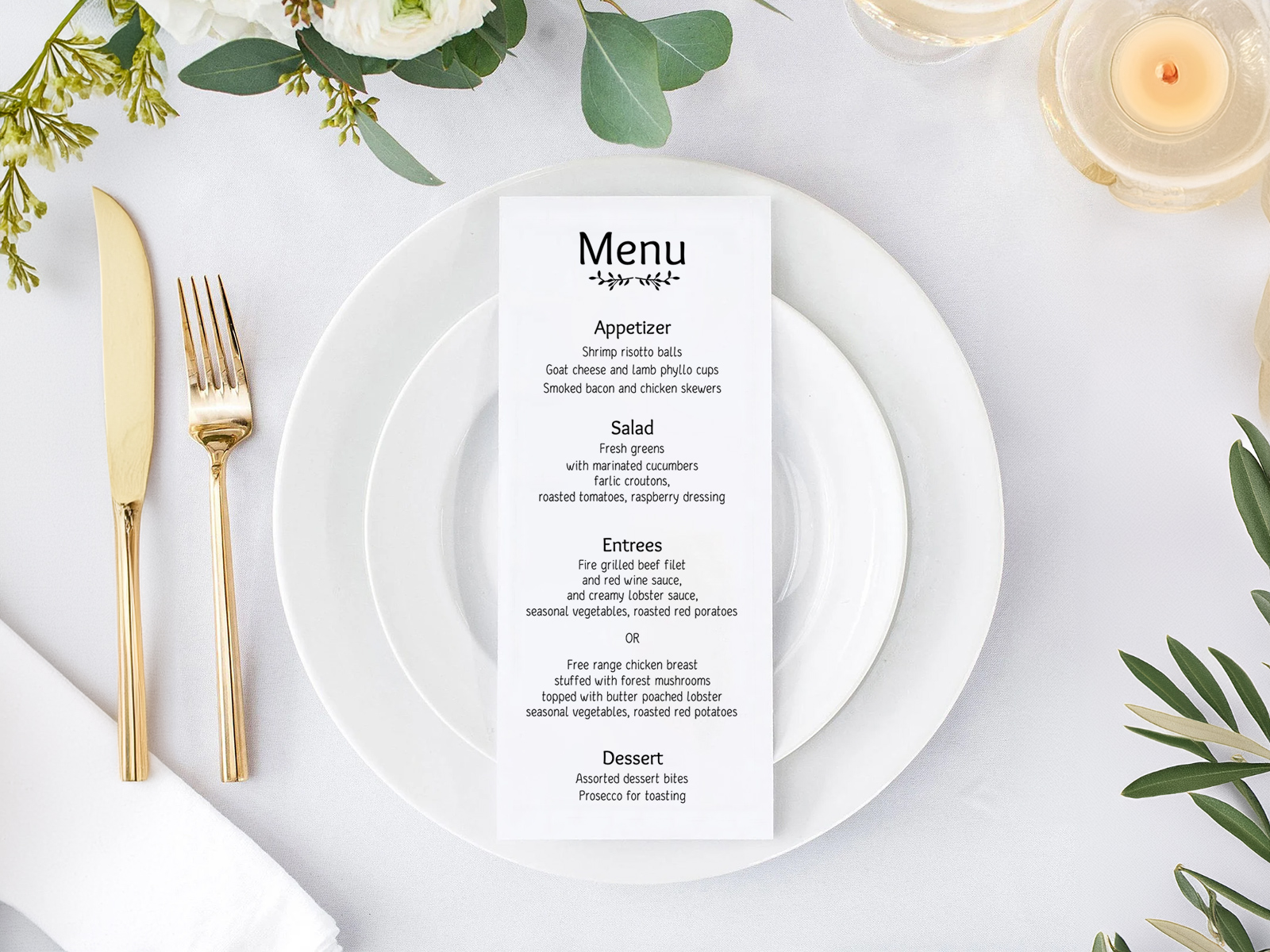
Modern wedding suites split into two tiers with different vendors and different timelines. The invitation suite arrives in the mail months before the wedding — invitation, RSVP card, details enclosure, save-the-date. The day-of suite arrives at the venue on the wedding day — seating chart sign, menus, place cards, escort cards, table numbers, table seating cards.
The two tiers usually go through different production paths — the invitation suite is best handled by a stationer who can letterpress or digitally print custom designs, while the day-of suite is best generated from your seating chart project so it stays in sync with last-minute RSVP changes. Both halves share the same design system.
How One Design System Carries from Save-the-Date to Thank-You Card
The trick is to lock the design system at Phase 1 (save-the-date) and let it cascade through every later piece. Pick the typography pair, the color palette, and the decorative motif when you design the save-the-date — then every subsequent piece (invitation suite, day-of, thank-yous) inherits.
Our wedding planning assistant accepts the design system as a project-level setting. Pick the font, the color and the motif once, and every day-of piece generated from the project uses them automatically. Update the design once and every printed piece refreshes — no version drift between the menu, the place card, and the table number.
Try it free — no sign-up needed
Why Day-of Stationery Coordination Matters Most
The invitation suite arrives in the mail one piece at a time and is read in isolation. The day-of suite arrives on the same plate and is read together. Place card, menu, table number — all three sit at the same place setting and a guest sees them in a single glance. Mismatch shows immediately; coordination disappears (which is the point).
This is the hardest tier to coordinate manually because it's six different printed pieces produced in the final two weeks before the wedding, often during peak RSVP chaos. Auto-generating all six from the same project is the only practical way to keep them visually aligned at scale.
Common Suite Components — A Compact List
A typical full suite includes the pieces below. Mix and match by venue and format — not every wedding needs every item, and the checklist covers the essential-vs-optional split in detail.
- Pre-wedding — save-the-date.
- Invitation suite — invitation, RSVP, details enclosure, envelopes.
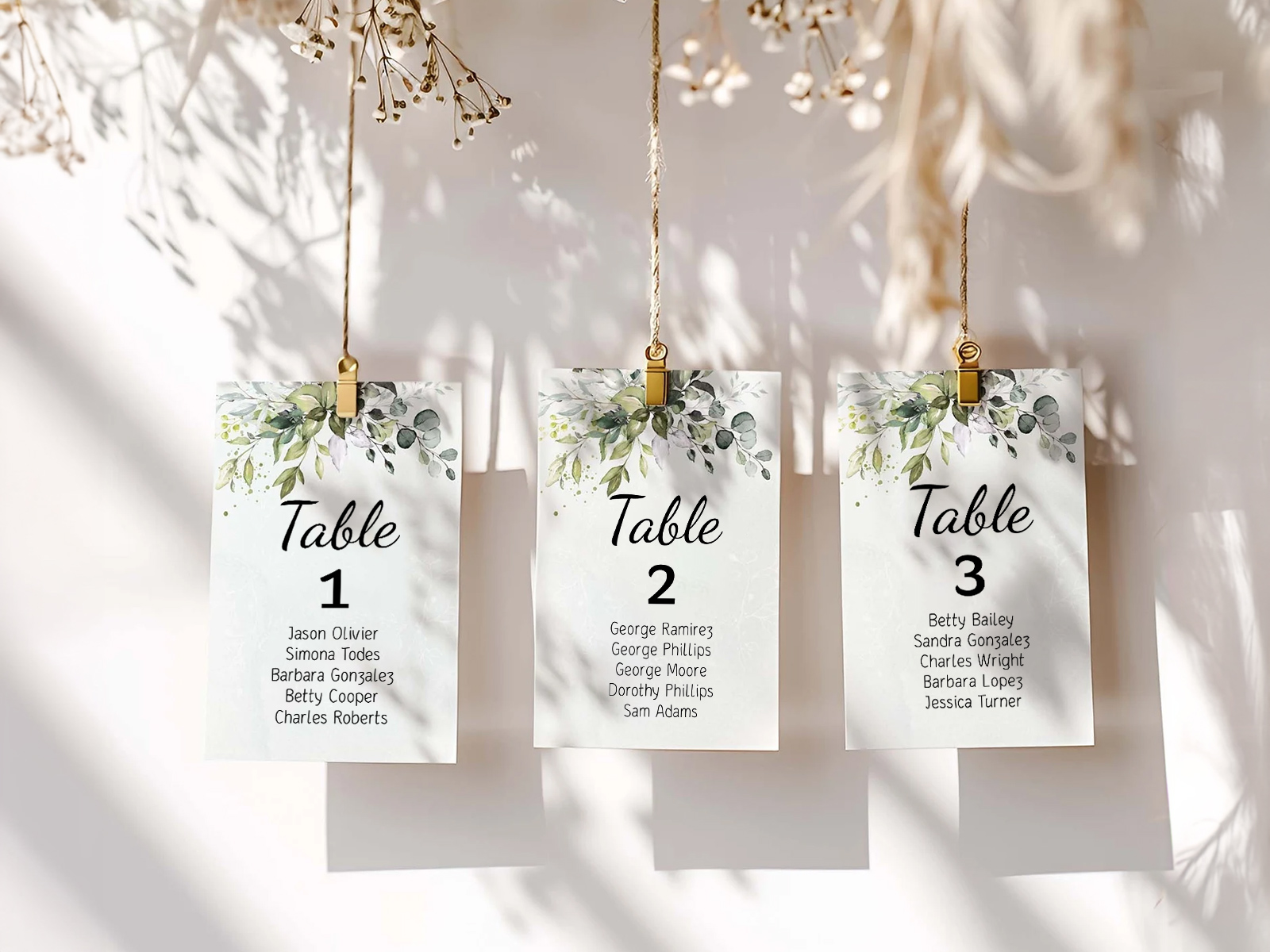
- Day-of suite — seating chart sign, escort cards, place cards, menu cards, table numbers, table seating cards.
- Post-wedding — thank-you cards, optional photo announcement.
Why Use Our Tool for the Day-of Half
Six day-of pieces, one project. Pick the design system once at the project level — typography, color, motif, paper — and the seating chart sign, escort cards, place cards, menu, table numbers and table seating cards all inherit. Free, collaborative, synced with your guest list and RSVP data, and updated automatically when anything changes.
Explore the rest of the wedding stationery hub
Each sub-page below covers a narrow slice of wedding stationery — the complete checklist, how to build a cohesive suite, and the reception-only paper goods — all powered by the same Wedding Planning Assistant seating chart project.
Explore the rest of your wedding day-of stationery suite
Each item below pulls live from your seating chart on Wedding Planning Assistant, so a single update to your guest list flows through every printed piece — no copying names from one template to the next.